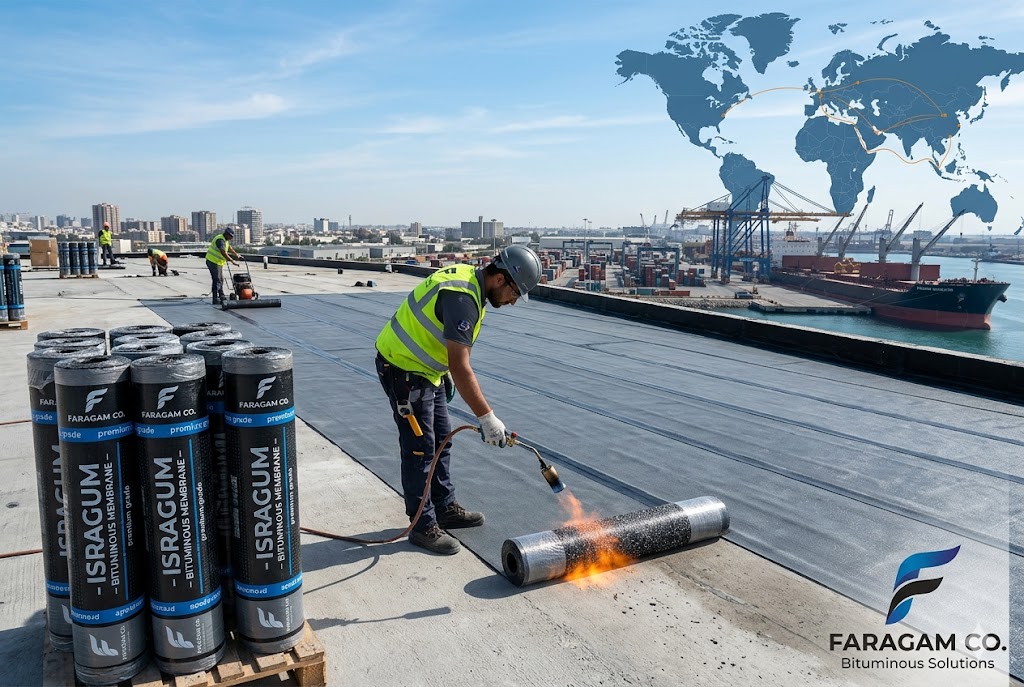
Bituminous Membrane Sheets (Isogum) Manufacturing, Applications, and Markets
When it comes to safeguarding modern infrastructure from water ingress, structural degradation, and harsh environmental weathering, bituminous membrane sheets—commercially known in many global regions as Isogum—remain the gold standard. From high-rise commercial roofs to deep sub-structural foundations, these pre-fabricated waterproofing sheets provide an impenetrable barrier against moisture.
For construction firms, civil engineers, and international procurement managers, sourcing high-grade Isogum is a foundational requirement for structural longevity. In this comprehensive guide, we explore how bituminous membranes are manufactured, their primary industrial applications, global trade flows, and how Faragam serves as a premier, globally trusted supplier and exporter in the waterproofing industry.
1. What is Isogum? Understanding Bituminous Membrane Sheets
A bituminous waterproofing membrane sheet is a complex, multi-layered material engineered to repel water while retaining flexibility across a broad spectrum of temperatures. While traditional Built-Up Roofing (BUR) required multiple layers of liquid asphalt and felt applied on-site, modern Isogum compresses these protective elements into an easy-to-install, uniform roll.
The core composition typically features:
-
The Reinforcement Core: A heavy-duty carrier layer of non-woven fiberglass polyester matting, providing tensile strength and tear resistance.
-
The Modified Bitumen Compound: Refined petroleum bitumen blended with specialized polymers to alter its physical properties.
-
The Protective Finish: A top layer of fine sand, talc, or reflective mineral granules (for UV protection) and a bottom layer of burn-off polyethylene film for torch-applied installation.
Polymer Modification: APP vs. SBS
To make raw bitumen resilient enough for construction, it must be modified with one of two distinct polymer types:
-
Atactic Polypropylene (APP): A plastic modifier that increases the melting point and enhances UV resistance. APP membranes are ideal for hot, arid climates and are typically installed using a gas torch.
-
Styrene-Butadiene-Styrene (SBS): A synthetic rubber modifier that radically improves low-temperature flexibility and elastic recovery. SBS membranes are perfectly suited for colder climates or structures prone to thermal movement.
2. The Advanced Isogum Manufacturing Process
The production of high-performance bituminous sheets requires precision engineering and state-of-the-art compounding facilities. The standard manufacturing process follows a continuous automated production line:
[Raw Bitumen + Polymers Blend] ──> [Impregnation of Pss] ──> [Cooling & Calibration] ──> [Surface Finishing] ──> [Rolling & Packaging]
-
Bitumen Modification & Compounding: Raw asphalt is heated to high temperatures and thoroughly blended with APP or SBS polymers, alongside filler stabilizers. This process optimizes the blend’s elasticity, viscosity, and aging characteristics.
-
Carrier Impregnation: The reinforcement core (polyester or fiberglass mat) is fed into a continuous bath of the hot modified bitumen compound. The mat absorbs the mixture, ensuring zero air pockets or structural gaps.
-
Thickness Calibration: The coated mat passes through precision heavy rollers to ensure a completely uniform thickness, typically ranging from 2mm to 5mm depending on the product grade.
-
Surface Finishing & Texturing: Depending on the application, the top layer is coated with minerals, sand, or polyethylene film. The bottom side is universally laminated with a thin, heat-sensitive PE film.
-
Cooling and Rewinding: The continuous sheet passes through a water-cooling system to solidify. It is then measured, automatically cut into standard 10-meter lengths, rolled, labeled, and palletized for global shipping.
3. Primary Applications in Modern Architecture
Isogum is incredibly versatile, making it the preferred waterproofing medium across domestic, commercial, and heavy civil engineering applications:
-
Flat and Low-Slope Roofs: Flat roofs accumulate standing water quickly. Multi-layer bituminous membranes provide a completely seamless, continuous water barrier across massive surface areas.
-
Foundations and Basements: Soil moisture and hydrostatic pressure can force water through concrete walls. Applying Isogum to retaining walls and deep foundations protects structures from underground water tables.
-
Bridges, Tunnels, and Decks: Civil infrastructure requires heavy-duty waterproofing capable of surviving vehicular loads and vibration. Bituminous sheets are applied to bridge decks and under railway lines before the final asphalt or ballast is laid.
-
Wet Areas & Storage Tanks: Bathrooms, industrial kitchens, commercial swimming pools, and concrete water reservoirs rely on inner linings of Isogum to prevent internal structural leakage.
4. Comparing Bituminous Membranes with Alternative Sealants
To understand why bituminous sheets remain an industry favorite, it is helpful to look at how they compare directly to other common industrial sealants and liquid coatings:
5. Global Market Insights: Top Importing Countries for Isogum
The demand for high-tier bituminous waterproofing membranes continues to rise globally due to rapid urbanization, infrastructural modernization, and changing weather patterns that demand better climate resilience.
The primary international markets driving the import of bituminous sheets include:
-
The European Union (EU): Industrialized nations like Germany (where approximately 60% to 70% of flat roofs utilize bituminous membranes), France, and Poland consistently import huge volumes to comply with strict building insulation and longevity standards.
-
The Middle East & North Africa (MENA): Driven by massive megaprojects in the UAE, Saudi Arabia, and Qatar, the region requires high-grade, heat-resistant APP modified sheets to withstand extreme desert temperatures.
-
Central and South Asia: Countries undergoing rapid urban expansion and severe monsoon seasons, such as India, Uzbekistan, and Kazakhstan, are heavily investing in robust sub-structural waterproofing products.
-
Southeast Asia: Rapid industrial zone developments in countries like Vietnam, Indonesia, and Malaysia require dependable waterproofing for manufacturing plants and logistics hubs.
6. Faragam: Your Reliable Global Supplier and Exporter
Sourcing waterproofing materials at an international scale requires a partner that can guarantee strict quality controls, large-scale production capacities, and flawless logistics. Faragam stands out as a world-class manufacturing and exporting powerhouse of premium bituminous membrane sheets.
Why Choose Faragam?
-
Premium Raw Materials: Faragam utilizes highly refined base bitumen and top-tier polymers (APP/SBS) alongside heavy-duty polyester non-woven reinforcements to manufacture sheets that outlast industry standards.
-
Tailored Product Line: We produce customized thicknesses, customized surface finishes (mineral granules, aluminum foil, or PE film), and climate-specific formulations optimized for your target destination’s weather conditions.
-
Rigorous Quality Assurance: Every production batch at Faragam undergoes stringent laboratory testing for tensile strength, low-temperature flexibility, heat stability, and puncture resistance.
-
Seamless Global Logistics: Sourcing from Faragam guarantees efficient bulk packaging, secure loading, and compliant customs documentation. We export directly to key construction hubs across Europe, Central Asia, and the Middle East, ensuring timely delivery directly to your port or warehouse.
Conclusion: Protect Your Infrastructure with Faragam
Whether you are a global distributor building a high-volume supply chain or an international contractor managing a critical infrastructure project, the quality of your waterproofing cannot be compromised. Bituminous membrane sheets offer the absolute best balance of cost, durability, and resilience available to the modern construction sector.
Partner with an industry leader to elevate your projects. Contact the Faragam Export Division today to request product datasheets, custom manufacturing quotes, or sample batches tailored specifically to your market’s requirements.