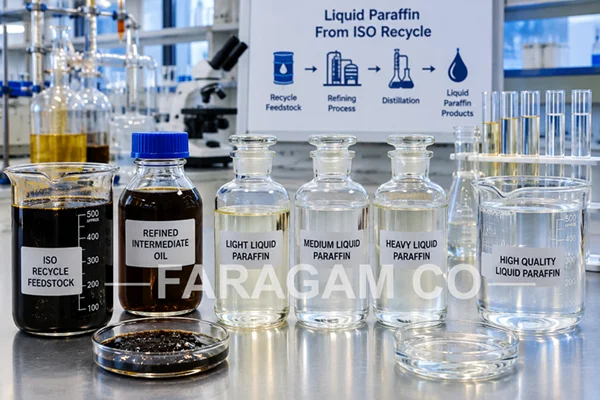
Liquid Paraffin Manufacturing from ISO Recycle Feedstock, Complete Industry Guide
Liquid paraffin, also known as mineral oil or white oil depending on its purity level, is one of the most widely used petroleum-derived products in industrial, pharmaceutical, cosmetic, agricultural, and chemical sectors. Modern refineries and specialized processing plants increasingly utilize ISO recycle feedstock as a valuable raw material for producing high-quality liquid paraffin.
The growing demand for cost-effective and sustainable petroleum derivatives has encouraged manufacturers to optimize recycling and re-refining technologies. As a result, ISO recycle feedstock has become an important source for producing industrial-grade liquid paraffin suitable for numerous applications worldwide.
This article explains the manufacturing process, product grades, quality characteristics, applications, export markets, and the role of professional suppliers such as Faragam in the global liquid paraffin industry.
What Is Liquid Paraffin?
Liquid paraffin is a highly refined hydrocarbon oil derived from petroleum. It is colorless, odorless, chemically stable, and possesses excellent lubricating and insulating properties.
Depending on the refining level, liquid paraffin may be classified as:
- Industrial Grade Liquid Paraffin
- Technical Grade Liquid Paraffin
- Cosmetic Grade Liquid Paraffin
- Pharmaceutical Grade Liquid Paraffin
- Food Grade White Oil
The final grade depends on feedstock quality and the sophistication of the refining process.
Understanding ISO Recycle Feedstock
ISO recycle feedstock refers to hydrocarbon streams recovered and reprocessed from petroleum refining operations. These streams contain valuable paraffinic hydrocarbons that can be purified and transformed into useful products.
Instead of being discarded or burned as low-value fuel, ISO recycle materials can undergo advanced refining procedures to recover high-value liquid paraffin products.
Benefits of utilizing ISO recycle feedstock include:
- Better resource utilization
- Reduced production costs
- Lower environmental impact
- Improved refinery efficiency
- Enhanced sustainability in petroleum processing
How Liquid Paraffin Is Manufactured from ISO Recycle Feedstock
Feedstock Collection and Preparation
The process begins with collecting ISO recycle streams generated during refinery operations. These materials are carefully analyzed to determine:
- Sulfur content
- Aromatic content
- Viscosity
- Hydrocarbon composition
- Water contamination
After testing, the feedstock undergoes pretreatment to remove impurities.
Hydrotreating Process
Hydrotreating is one of the most critical stages in liquid paraffin production.
During this step:
- Sulfur compounds are removed.
- Nitrogen compounds are eliminated.
- Aromatic hydrocarbons are reduced.
- Product color is improved.
Hydrogen and specialized catalysts are used under controlled pressure and temperature conditions.
Distillation and Fractionation
The purified material is separated into different viscosity ranges through vacuum distillation.
The resulting fractions may be processed into:
- Light Liquid Paraffin
- Medium Liquid Paraffin
- Heavy Liquid Paraffin
Each fraction serves different industrial requirements.
Dewaxing and Finishing
To achieve superior clarity and stability, the product undergoes dewaxing and polishing treatments.
Benefits include:
- Improved transparency
- Better oxidation resistance
- Lower pour point
- Enhanced storage stability
Quality Control and Packaging
Final products are tested according to international standards.
Typical parameters include:
- Density
- Viscosity
- Flash Point
- Color
- Sulfur Content
- Aromatic Content
The finished liquid paraffin is then packed in:
- Steel drums
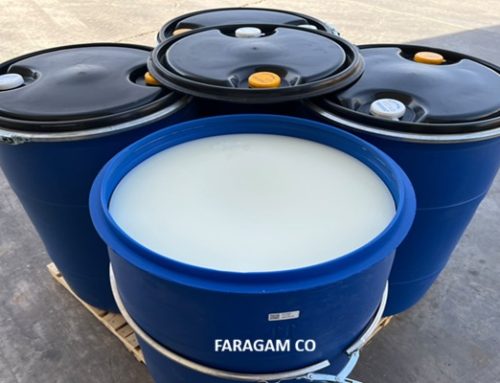
- HDPE drums
- IBC tanks
- Flexi tanks
- ISO tanks
- Bulk tankers
Main Liquid Paraffin Grades
Light Liquid Paraffin
Light grades exhibit lower viscosity and excellent transparency.
Typical Applications
- Textile processing
- Agricultural sprays
- Mold release agents
- Lubricants
Medium Liquid Paraffin
Medium viscosity grades provide balanced performance.
Typical Applications
- Industrial lubrication
- Chemical manufacturing
- Rubber processing
- Plastic processing
Heavy Liquid Paraffin
Heavy grades offer superior lubricity and film strength.
Typical Applications
- Industrial machinery
- Metalworking
- Transformer oils
- Heavy-duty lubrication
Liquid Paraffin Grades Comparison
| Property | Light Grade | Medium Grade | Heavy Grade |
|---|---|---|---|
| Viscosity | Low | Medium | High |
| Density | Lower | Medium | Higher |
| Transparency | Excellent | Very Good | Good |
| Lubrication | Moderate | Good | Excellent |
| Textile Industry | Excellent | Good | Limited |
| Rubber Industry | Moderate | Excellent | Excellent |
| Chemical Processing | Excellent | Excellent | Good |
| Metalworking | Limited | Good | Excellent |
Key Advantages of Liquid Paraffin Produced from ISO Recycle Feedstock
Economic Benefits
Manufacturers benefit from lower raw material costs while maintaining product performance.
Advantages
- Cost optimization
- Higher refinery efficiency
- Increased resource recovery
Environmental Benefits
Re-refining and recycling reduce waste generation and improve sustainability.
Environmental Impact
- Reduced carbon footprint
- Better hydrocarbon recovery
- Lower waste disposal requirements
Consistent Product Quality
Modern refining technologies enable manufacturers to achieve consistent specifications suitable for industrial applications.
Major Applications of Liquid Paraffin
Textile Industry
Liquid paraffin is widely used as:
- Fiber lubricant
- Knitting oil component
- Textile finishing aid
Rubber and Tire Manufacturing
Manufacturers utilize liquid paraffin as:
- Processing oil
- Plasticizer
- Softening agent
Chemical Industry
Applications include:
- Solvent carrier
- Chemical intermediate
- Processing aid
Agriculture
Agricultural-grade paraffin oils are used in:
- Crop protection formulations
- Insect control sprays
- Horticultural oils
Plastic Industry
Plastic processors use liquid paraffin for:
- Polymer processing
- Mold release applications
- Surface treatment
Global Export Destinations for Liquid Paraffin
Demand for liquid paraffin continues to grow across international markets.
Middle East
Key importing countries include:
- United Arab Emirates
- Saudi Arabia
- Oman
- Iraq
- Qatar
Africa
Growing markets include:
- Tanzania
- Kenya
- Uganda
- South Africa
- Ethiopia
Asia
Major buyers include:
- India
- China
- Bangladesh
- Vietnam
- Indonesia
Europe
Industrial consumers are located in:
- Turkey
- Romania
- Bulgaria
- Poland
- Italy
Major End Users of Liquid Paraffin
The primary consumers include:
- Textile manufacturers
- Rubber factories
- Tire producers
- Chemical companies
- Plastic manufacturers
- Agricultural chemical formulators
- Lubricant producers
- Industrial maintenance companies
Why Choose Faragam as Your Liquid Paraffin Supplier?
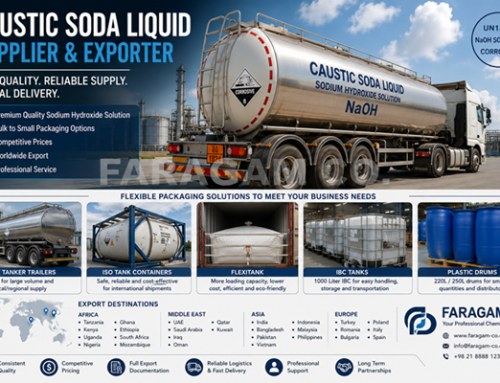
Faragam has established itself as a reliable exporter and supplier of petroleum-derived products for international markets.
Faragam Advantages
Quality Assurance
All products undergo strict quality control procedures before shipment.
Flexible Packaging
Available in:
- Drums
- IBC tanks
- Flexi tanks
- Bulk tanker shipments
Export Experience
Faragam supplies customers across:
- Africa
- Middle East
- Asia
- Europe
Competitive Pricing
Strong sourcing capabilities and efficient logistics allow Faragam to offer competitive prices while maintaining consistent quality.
Future Outlook of Liquid Paraffin Production
As global industries continue seeking cost-effective and sustainable raw materials, the use of ISO recycle feedstock for liquid paraffin production is expected to expand significantly.
Advances in hydrotreating, catalytic refining, and purification technologies will further improve product quality while reducing environmental impact. Manufacturers that adopt modern recycling-based refining solutions will gain competitive advantages in both domestic and international markets.
Liquid paraffin produced from ISO recycle feedstock represents an efficient and sustainable solution for modern industrial requirements. Through advanced refining processes such as hydrotreating, fractionation, and polishing, manufacturers can obtain high-quality liquid paraffin suitable for textile, rubber, plastic, agricultural, and chemical applications.
With increasing demand across Africa, Asia, Europe, and the Middle East, reliable suppliers play a critical role in ensuring consistent product quality and export performance. Faragam continues to support global customers with dependable liquid paraffin supply, professional logistics, and international trade expertise.